
Acholi Cultural Leaders, Women’s Rights Group Partner to Strengthen Women’s Voices and Community Peace
Story By Okello Patrick|NGUNAGULU.COM
Gulu, Uganda — Acholi cultural leaders and women’s rights advocates have launched a new partnership aimed at promoting women’s leadership, livelihoods, and sustainable peace across the region.
Cultural and Civic Actors Build a Shared Vision
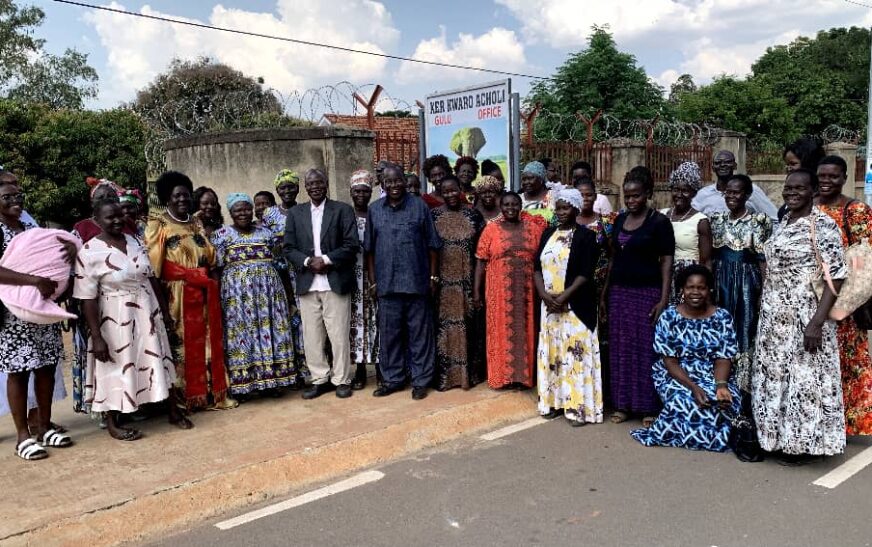
Recently, traditional leaders under Ker Kwaro Acholi (KKA) and members of the Gulu Women Rights Advocacy Coalition (GWARC) met in Gulu. From the outset, both sides expressed concern about the future wellbeing of the Acholi community and women’s role within it. Consequently, the engagement created a rare platform where cultural leadership and women’s rights activism converged.
Led by the Lawirwodi Acholi under Rwot Richard Santo Apire, the meeting encouraged open dialogue. Through these discussions, participants examined persistent social and economic challenges affecting women. Eventually, the deliberations resulted in a formal partnership focused on strengthening women’s voices while reinforcing peace and local governance.
Ker Kwaro Acholi Strengthens Grassroots Trust
According to Rwot Apire, many women in Acholi rely on cultural institutions as their closest and most trusted leadership structures. Therefore, Ker Kwaro Acholi offers cultural legitimacy, deep community reach, and strong convening power. As a result, the institution can create acceptance and dialogue at grassroots level, where social change gains momentum.
Furthermore, cultural leaders emphasized that peace remains fragile without women’s meaningful inclusion. For this reason, KKA committed to promoting women’s participation in leadership, mediation, and community decision-making processes.
GWARC Drives Rights, Skills, and Accountability
Meanwhile, GWARC brings technical expertise in women’s rights advocacy, economic empowerment, and capacity building. In addition, the coalition supports accountability frameworks that translate dialogue into action. Consequently, women’s voices gain both visibility and institutional backing within community systems.
Moreover, GWARC pledged to work closely with cultural leaders to align rights-based approaches with local realities. Through this approach, resistance is reduced while community ownership is strengthened.
Women-Centered Development for Peaceful Communities
Notably, the partnership places women at the center of development and peacebuilding initiatives. Specifically, it prioritizes leadership development, livelihood support, and peaceful coexistence. Likewise, the collaboration seeks to expand women’s access to entrepreneurship opportunities and local value chains.
At the same time, partners aim to promote fair community justice mechanisms that protect women’s rights. Ultimately, stakeholders believe the alliance will enhance social cohesion and inclusive development across Acholi.
http://Acholi Leaders Unite to Empower Women and Build Peace